
Srah Srang
ស្រះស្រង់
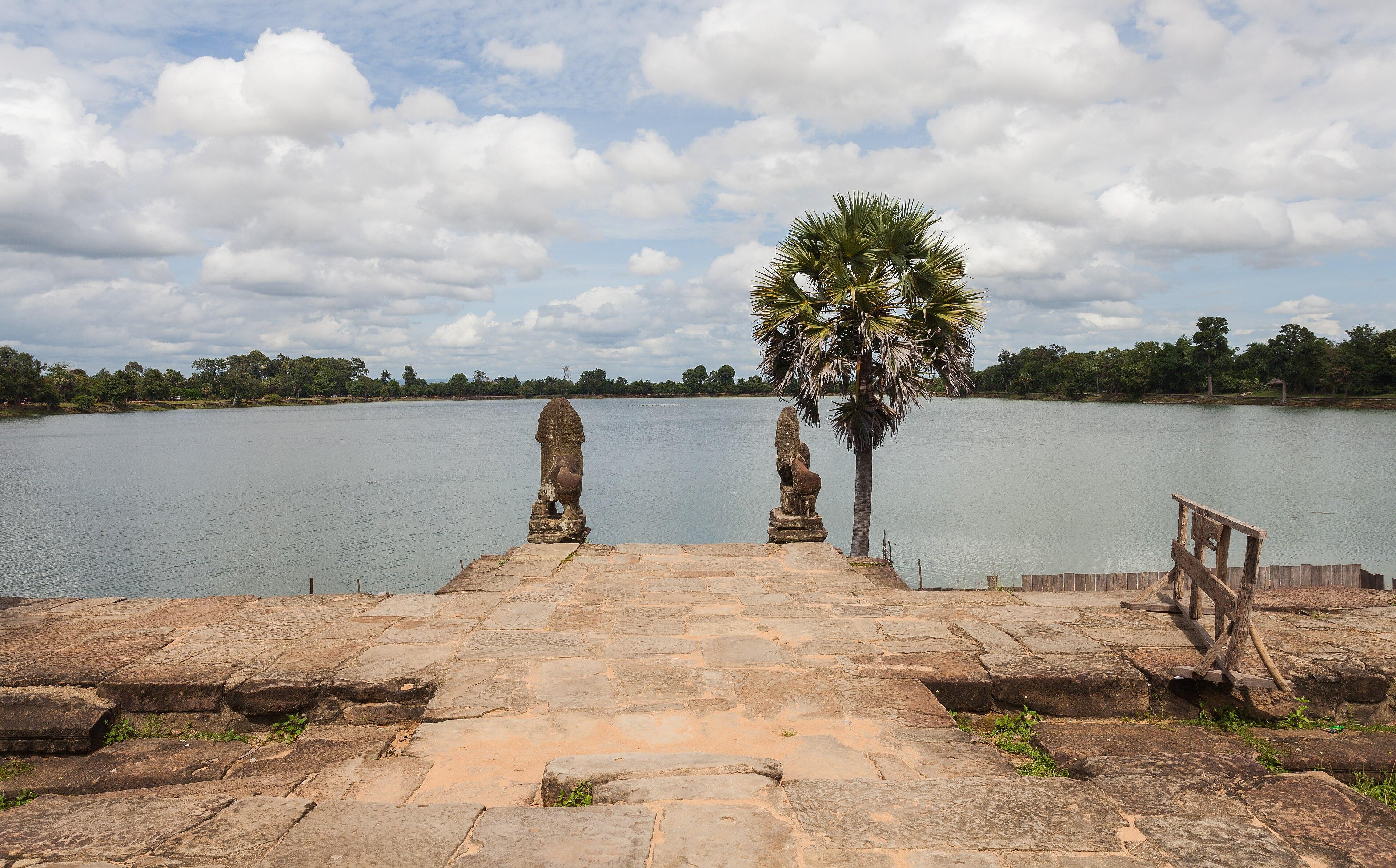
The royal bathing pool opposite Banteay Kdei. A sandstone landing with nagas is the sunrise seat of the Small Circuit.
Quick facts
- Pass Type
- Angkor Pass ($37-$72)
- Entry Fee USD
- Included
- Opening Hours
- 6:00 AM - 7:00 PM
- Commissioning King
- Rajendravarman II
- Century Built
- 10th Century
- Religion & Primary Deity
- Hindu & Buddhist
- Circuit
- Small Circuit
- Distance from Siem Reap
- 12 km
- Best Time to Visit
- Sunrise, from the west landing stage, looking east across the water
Nicknames and famous highlights
History and architecture
Srah Srang was dug in the mid-10th century under Rajendravarman II as a royal bath. Jayavarman VII later rebuilt the western landing stage in sandstone, with lions and naga balustrades, which is the platform visitors use. It is water architecture rather than a temple, so there is no cult image. The pool still holds water, and the color at first light is the reason to come. The site stays open into the evening for sunset as well.
How to get to Srah Srang
No origin routes are published yet. See every temple in Siem Reap.
Questions people ask
How much does it cost to visit Srah Srang?
Srah Srang is covered by Angkor Pass ($37-$72) and has no extra per-temple fee in this directory.
What are the opening hours of Srah Srang?
Srah Srang is listed as open 6:00 AM - 7:00 PM. Best time to visit: Sunrise, from the west landing stage, looking east across the water.
Who built Srah Srang?
Commissioned under Rajendravarman II, 10th Century, Mid-10th century. The religion recorded here is Hindu & Buddhist.
What is Srah Srang known for?
Also called Royal Bath. Known for Sandstone landing stage, Naga balustrades, Sunrise over the pool, View back to Banteay Kdei
More temples in Siem Reap
- Angkor WatSmall Circuit · Included
- BayonSmall Circuit · Included
- Angkor ThomSmall Circuit · Included
- Ta ProhmSmall Circuit · Included
- Banteay SreiOuter Temple · Included
- Preah KhanGrand Circuit · Included
- Phnom KulenOuter Temple · $20
- Beng MealeaOuter Temple · $10
- Pre RupGrand Circuit · Included
- Phnom BakhengSmall Circuit · Included
- Wat BoCity Pagoda · Free
- Terrace of the ElephantsSmall Circuit · Included
- Banteay KdeiSmall Circuit · Included
- Kbal SpeanOuter Temple · $5
- BaphuonSmall Circuit · Included
- Banteay SamreGrand Circuit · Included
- BakongRoluos Group · Included
- Wat ThmeiCity Pagoda · Free
- Wat Preah Prom RathCity Pagoda · Free
- Wat PolankaCity Pagoda · Free
- Ta SomGrand Circuit · Included
- Prasat KravanSmall Circuit · Included
- Ta KeoSmall Circuit · Included
- Neak PeanGrand Circuit · Included
- PhimeanakasSmall Circuit · Included
- Phnom KromOuter Temple · Included
- Phnom BokOuter Temple · Included